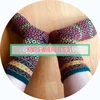
When learning to knit we are told to "knit a gauge swatch" That's it. But, knitting a fabulous gauge swatch is more involved than just doing it. And when we seek help from other knitters we often get bad advice and incomplete information.
But, I have good news, we do not have to keep living this way. We can get better results from our swatches by following some easy steps. Yes, some of this is about paying attention to details. But, paying attention to details is the difference between handmade and homemade. To find my top 10 tips for getting an accurate gauge swatch click below to keep reading
So often I see it on the Intertubes
Well, I am here to tell you, PROVISIONAL CAST-ONS ARE WORTH THE EFFORT! And I promise if you can cast on, you can do a provisional cast on, and they are totally WORTH THE EFFORT.
Besides turning flat pieces into seamless tubes, with a provisional cast on you can:
If you are thinking, "Okay, great, but I cannot do Provisional Cast-on. I have tried it," I promise you are incorrect. The truth is there is no one provisional cast-on. Provisional Cast-on is a type of cast on and there are several methods of accomplishing it.
FYI: One of my favorite circular needles is the Addi Rockets. They are hands down my fastest needles.* Check out my blog post which discuesses a speek test comparison I did.
It's not easy. It definitely takes a mental toll. Simple things like going to the grocery store now take on much greater significance. I actually insisted that I was the one going to Costco because I needed to get out of the house and have some alone time. I do believe it's important in times like this to find joy, and crafting has always brought me joy. Like a good crafter I have a stash. It should, hopefully, last through this period in time. This week's video is about cleaning and sanitizing your knitting tools. I focused on knitting needles, but the information I share can be applied to any surface made of similar materials. Cleaning my knitting needles has never been something I thought a whole lot about, but it's good to know how to properly clean and disinfect any surface. The information I share is what I have learned on the internets. And below are links to helpful resources I found. Hang in there. This will end. REFERENCES:CDC: Prevening Covid-19 Spreading to Others: (read further down for information on washing clothing) The Atlantic: Now is the Time to Overreact: BBC: Covid-19: How Long Does Coronavirus Live on Surfaces: Business Insider: Another article on how long Coronavirus survives on surfaces and how to disinfect Consumer Reports: Cleaning Products that Destroy Coronavirus: WebMd: The Most Effective Ways to Kill Coronavirus at Home California Childcare Health Program: Handout on Cleaning & Disinfecting: Newsweek: Can I catch Coronavirus From My Phone, Clothes, or Other Surfaces? Knitter's Pride: Care and Maintenance of Knitting Needles Tonight finished editing my latest video and thumbnail. Gonna be honest. Kind of disappointed that my Monday tutorial on is languishing. Le Sigh. I've gotten nice feedback on my I knew going into this YouTube journey there were already a lot of videos out there and building an audience would take time.
As I'll probably state a million times, I first learned to knit from reading books and I have to say most of them did a really poor job of explaining good techniques for weaving in ends. It was only a few years ago I learned about using duplicate stitch to weave ends and it makes so much sense. Because the tail is following the stitch path of the work, and thus taking the shape of a stitch, it moves and stretch with the fabric avoiding any distortions. Plus the tail stays put. This is my go to method for weaving in ends Below are directions for making a sample swatch with a contrasting color so you can practice recognizing the stitch path. Duplicate Stitch Practice SwatchSupplies: Circular or DPN Worsed Weight Yarn: 2 colors Tapestry Needle Any yarn will do but I would recommend a smooth yarn that provides good stitch definition. I like worsted weight because the stitches are large enough to see, but you still have to do some work to identity the stitches. Directions:- Cast On: With Color A 20 - 30 stitches. -Knit Stockingette for 10 rows ending with a wrong side row. -Cut yarn leaving a 4-6 inch tail. (More tails to practice weaving in your ends the better) -Join Color B being sure to the new yarn has a good 4-6 inch tail. Do not use join methods like spit join, Russian Join, magic knot etc. that do not leave a tail to weave in - Knit 1 row. - Cut Color B leaving 4-6 inch tail -Slide fabric down to other end of needle -Join Color A the same as you did Color B -Knit Stockingnette for 10 rows. -Cast Off |
AuthorI'm Carrie CraftGeek. I've been knitting for 20 years and crafting my whole life. I love to share my passion with the world! *Indicates an affiliate link. As an affiliate I earn on qualifying purchases. To learn more about affiliate links please visit the FAQ
 Archives
June 2021
Categories
All
My YouTube Channel and Blog are free to enjoy, but they do take time, resources and coffee. If you'd like to tip me buy "buying me a coffee," it would be greatly appreciated
|
 RSS Feed